
AI marketing workflow
Claude Platform traces are not content approval
What marketing teams should require alongside Claude Platform traces: source evidence, a reviewed draft version and controls for client materials.
이 글은 영어로만 제공됩니다. 영어로 읽기
- 인용 출처
- 1
- 섹션
- 4
- 언어
- EN · 繁體 · 简体 · 日本語
임의로 기재한 수치가 아니라 빌드 시점에 기사 파일에서 집계한 수치입니다. 아래의 모든 주장을 클릭하면 이 출처 중 하나가 열립니다.
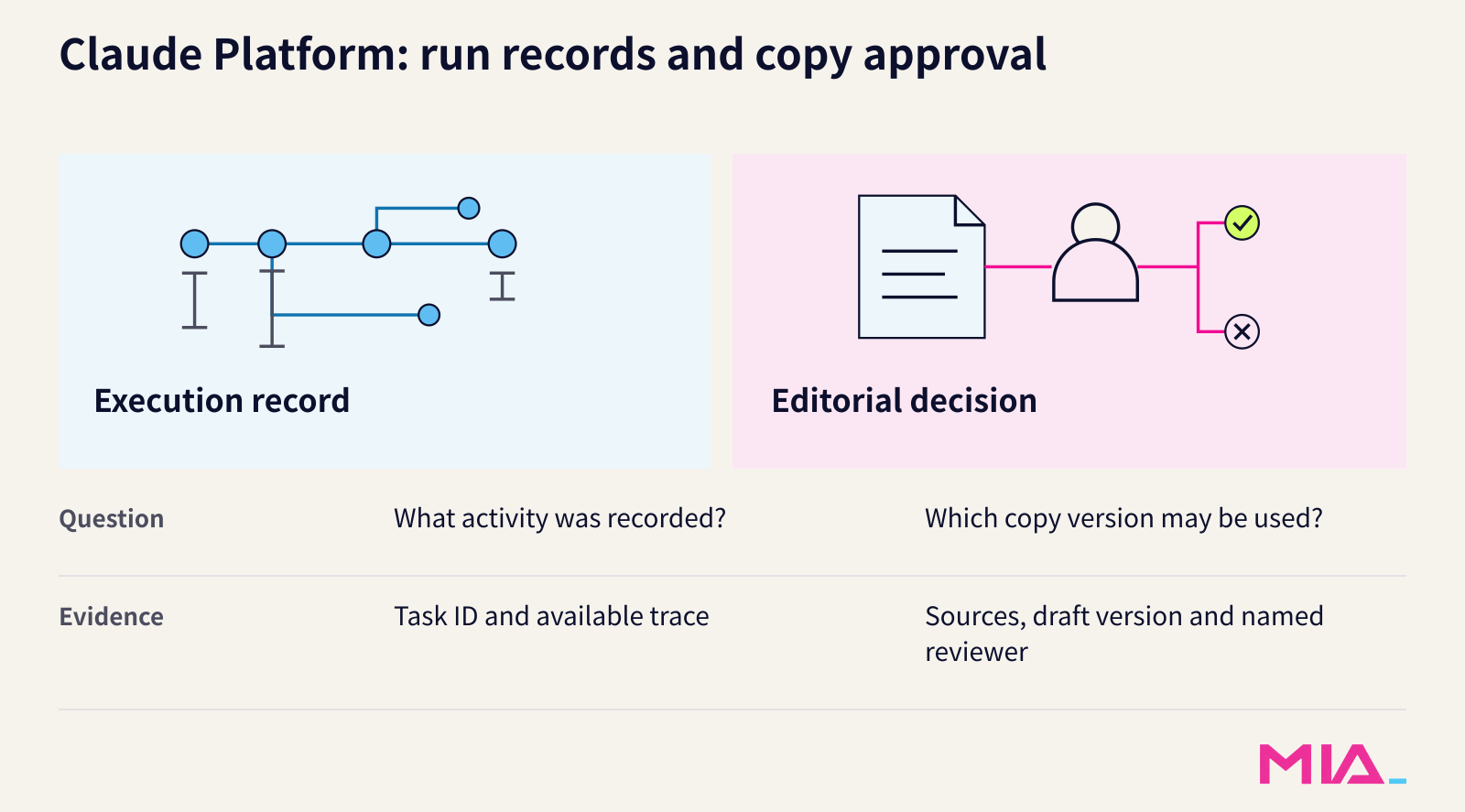
Can Claude Platform traces replace content approval?
Anthropic’s 14 October 2026 announcement covers OpenTelemetry traces from Claude Managed Agents, the Messages API and Claude SDKs on the Claude Platform.
For a marketing lead deciding whether an AI agent should work with campaign materials, the important distinction is between recording execution and authorising content for release. A trace is an operational record: it can help investigate activity captured during a run. An editorial approval is a decision about a particular piece of content. One should not stand in for the other.
The announcement’s stated scope does not, by itself, establish which records your deployment captures, how client materials are protected or who has cleared a draft. Treat tracing as one part of the evidence you require, not as permission to widen access or publish.
An AI marketing workflow needs separate records
Consider a proposed pilot: an agent produces a social-post draft from an authorised product brief and approved source material. Keep publishing access outside the pilot.
The handoff should let a reviewer answer three different questions:
- What happened during execution? Keep the available run record, identify the task it belongs to and confirm what the record actually covers.
- What supports the copy? Attach a source-to-claim record so the reviewer can check each product statement against its evidence.
- Which version was cleared? Identify the draft version and keep a separate approval record naming the reviewer, the exact version and the decision.
These are recommended records, not a claim that Claude Platform automatically creates this editorial handoff. Linking them to the same task makes the distinction practical: a completed run may have produced a draft that is still awaiting review or has been returned for correction.
A traced draft can still need correction
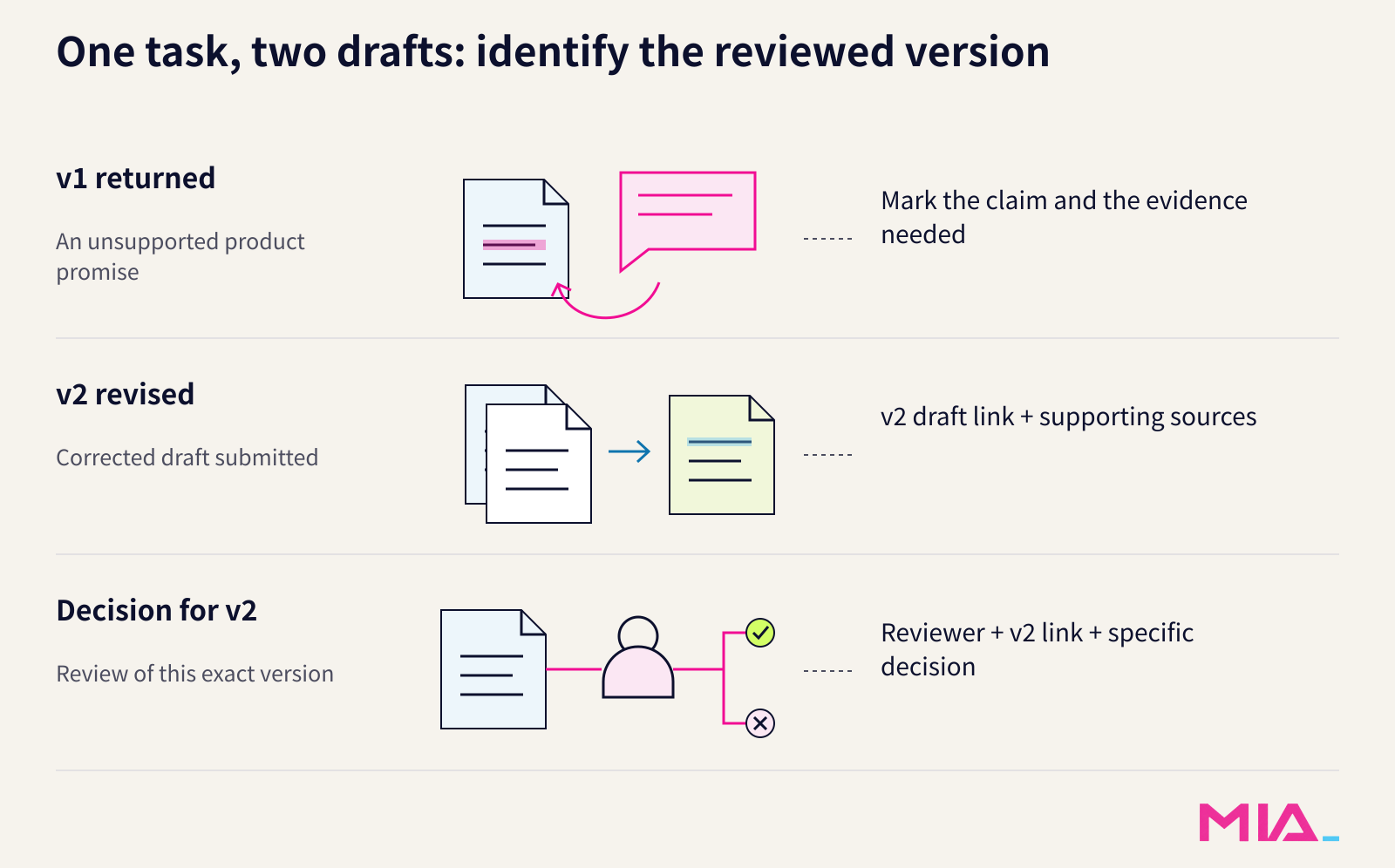
Suppose the pilot draft adds a product promise that the approved brief and sources do not support. Even if the execution was successfully traced, the copy should go back for correction. The trace does not supply the missing evidence for that promise.
After revision, the reviewer should inspect the changed version and record a new decision. An approval attached only to a task name is ambiguous when several drafts exist; the record should identify the actual content cleared.
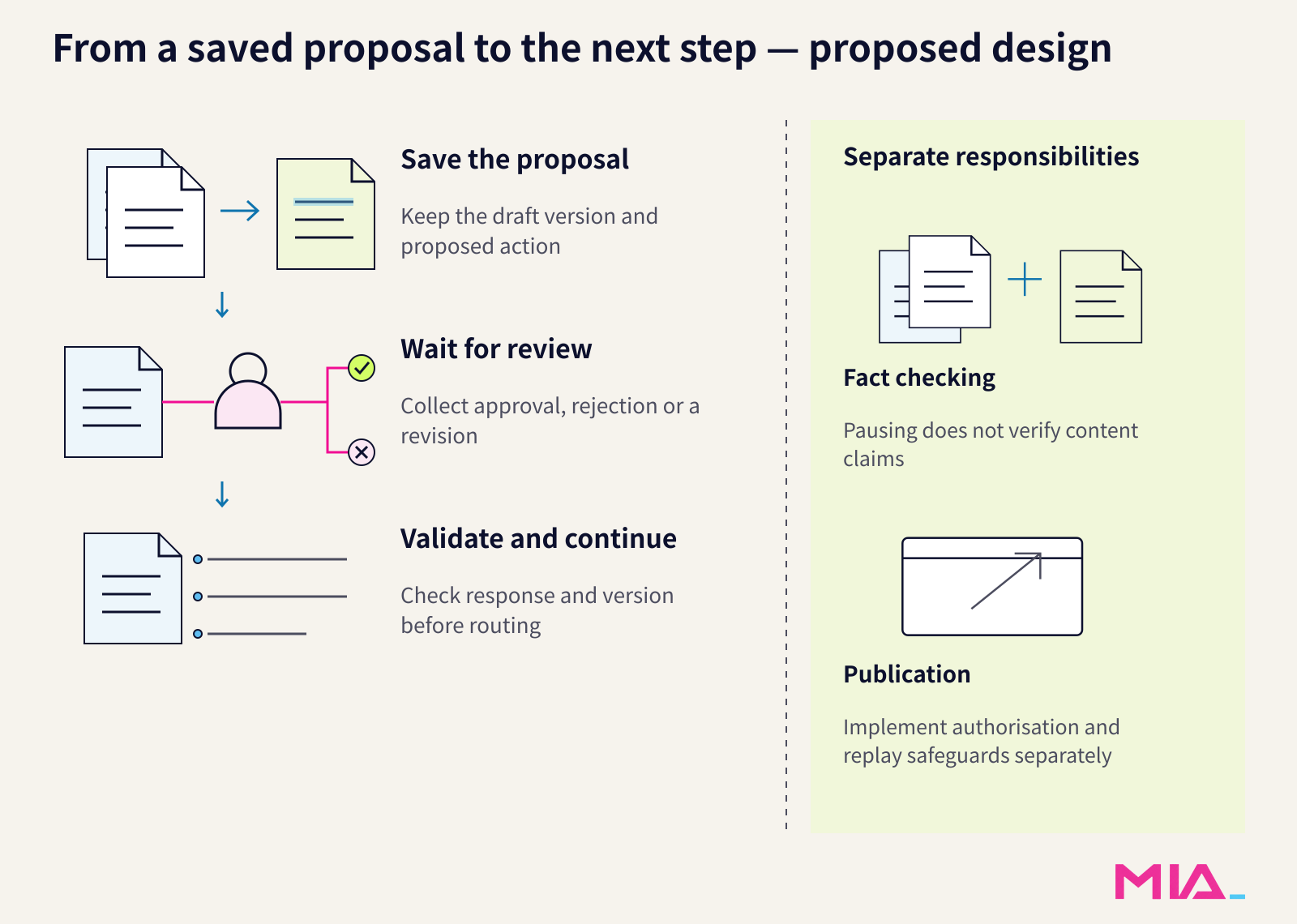
This is also a useful lens for evaluating workflow design. MIA’s Cowork workflow design describes inspectable inputs, outputs and handoffs, with a checkpoint that waits for a person to review, revise or approve. The page explicitly leaves specific access, retention and deployment controls to confirmation with the team. That design addresses the handoff question; it is not evidence of a Claude OpenTelemetry integration or a tested client deployment.
Before client access, ask what leaves the workflow
A draft-only pilot limits the task, but it does not settle how materials and records are handled. Before introducing client content or expanding permissions, ask the implementation owner for deployment-specific evidence covering:
- Inputs and tools: which materials the agent may read, which tools it may use and how one client’s work is separated from another’s.
- Exported records: which fields leave the workflow, what sensitive content is removed, the destinations and who can access them. Confirm processing and storage locations separately.
- Retention and deletion: how long materials and records remain, and how deletion is handled at each destination.
- Credentials and revocation: how credentials are handled and how access is withdrawn when the pilot ends or a team member’s role changes.
These are acceptance questions, not verified Claude or MIA safeguards. If the answers are missing, do not introduce sensitive client materials or broaden the agent’s permissions.
Start with the authorised brief, a reviewable draft and no publishing access. Decide whether to expand the pilot only after you can connect execution records to source evidence, an exact draft version and a human decision—and account for where the materials go.
다른 글
이어서 읽기
 AI brief: OpenAI’s voice model successors and Vercel’s MCP Events betaOpenAI documents GPT-Live-1.1 and Quip, while Vercel adds event subscriptions for compatible MCP servers in public beta.MIA Daily: five AI checks for brand teams — 15 October 2026A practical reading list on AI voice, video, agent memory, observability and document parsing, with official sources and a concrete check for each.
MIA가 Insight, Cowork, IQ를 통해 브리프를 어떻게 이어가는지 확인하세요.
여기서 설명한 제약 조건은 MIA IQ가 작업 사이에 유지하는 조건입니다.