
Ecosystem / Collaboration

What goes in. What comes back. What never crosses.

MIA is built to take context from other systems and hand governed work back. This page describes the shapes that connection could take, and the wall it does not cross. Nothing here is a signed partner or a live integration.

The exchange model

Four ports. One line nobody crosses.

Each port has an edge that takes something in and an edge that hands something back. The line running through the table is what never crosses, in either direction.

MIA / ecosystem · 4 ports · 8 edges1 boundary · nothing crosses it

A model, not a connection map. Each port is a category of collaboration we could design together; none of them is switched on, and the boundary is the same for all four.
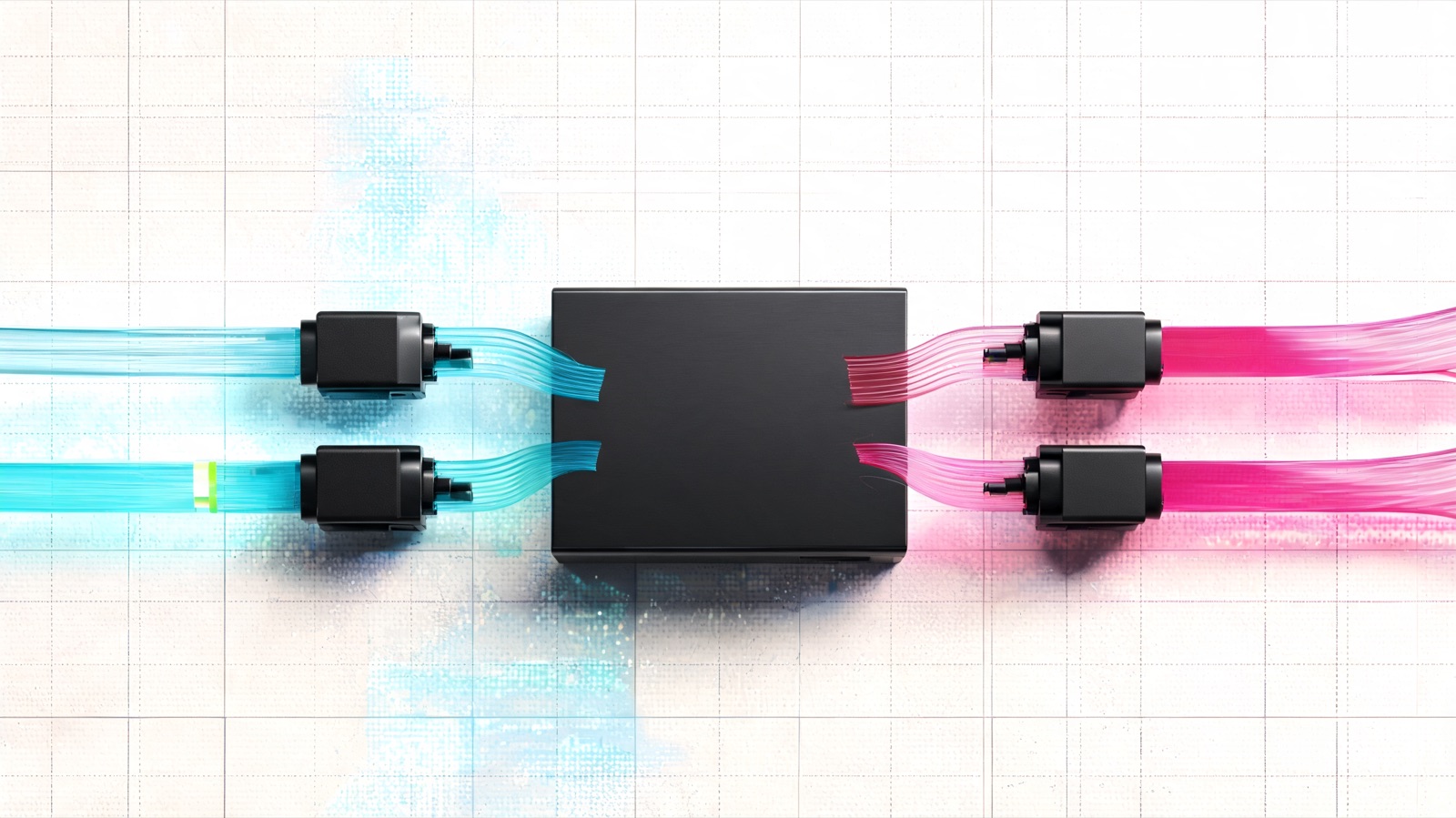
A black routing block on grid paper. Cyan ribbons run into it from the left through two connector modules, magenta ribbons run out to the right through two more, and one small lime marker sits on an incoming ribbon.
Abstract key visual, not a product capture and not a connection map. One colour goes in, another comes out, and the block in the middle is where the boundary lives.

Collaboration categories

Four categories. Each one is a conversation, not a connector.

Everything below is written in the conditional on purpose. A category describes work we could design together. It is not a product, not a connector, and not a relationship that already exists.

Data & signals

A data or research contributor brings evidence MIA does not hold. What goes back is the same evidence, prioritised and traceable to where it came from.

Could come in
Permissioned market, media and performance signals
Could go back
Ranked signals, each carrying its window and its source
Where it would start
Map which sources are approved, and which decision they would serve.

Content & channels

A channel or content system is where the work lands. MIA would draft into it, and the record of who approved what travels with the draft.

Could come in
Content systems, asset libraries and publishing workflows
Could go back
Drafted work carrying its brief, its evidence and its approval record
Where it would start
Pick one high-frequency content flow and follow it end to end.

AI & automation

Another AI system is a peer, not a black box. The interface worth designing is where control passes over, and where it comes back.

Could come in
Models, orchestration and evaluation tooling
Could go back
Defined handoffs, review points and refusal conditions
Where it would start
Define the handoff, the checkpoints, and how a result is judged.

Delivery & governance

Agencies, consultancies and in-house operators bring the judgement. What returns is the shape of the work, written down, so it survives the engagement.

Could come in
Domain expertise, brand rules and named review roles
Could go back
Reusable workflow patterns a team can run again
Where it would start
Agree who approves what, before anything is automated.

Scope, controls and evidence handling are agreed per engagement. No vendor, partner or integration is implied by a category appearing on this page.

Designed for real work

Four ways in. One loop.

Each one starts with something you already have and ends in work you can act on. The loop underneath is the same in all four.

Campaign intelligence loop

Goes in
Signals + brief
Comes out
Coordinated activation

Issue response room

Goes in
Emerging issue
Comes out
Governed response

Regional content operations

Goes in
Global direction
Comes out
Locally relevant work

AI-search visibility

Goes in
Visibility evidence
Comes out
Prioritized actions

Connection directory

Where we can start the connection conversation.

MIA ecosystem connection directory4

DomainConnection scopeCurrent pathStarting point
Data & intelligenceCustomer, market, media, research, and performance signalsDiscoveryMap approved sources and decision needs
Content & channelsContent systems, asset libraries, publishing, and activation workflowsWorkflow co-designSelect one high-frequency content flow
AI & automationModels, enterprise AI tools, orchestration, and evaluationInterface designDefine controls, hand-offs, and evaluation criteria
Governance & servicesAdvisory, delivery, compliance, review, and change enablementPartner pathwayAlign roles, responsibilities, and outcomes

These are categories and possible starting points, not signed partners or live integrations. Every path is agreed case by case.

The boundary

What never crosses, in either direction.

The wall is why a partner and a brand team can read the same page without watching each other. It is drawn once, and it does not move per engagement.

  • No partner name, logo, integration or certification appears on this site until there is something signed to point at.
  • Brand context stays with the brand it came from. Approved voice, rules and priorities are not carried into another party's work.
  • Nothing is dispatched to a channel without the brand team's named approver. That checkpoint is not negotiable per connection.
  • Raw source items stay inside MIA with their original links. A connection returns evidence and its window, never somebody else's archive.

If a connection would need one of those four to move, the answer is that we do not build it that way. Bring the case and we will say so out loud.

Start a collaboration

Bring one workflow worth connecting.

Not a platform and not a category — one piece of work that loses time, context or control today. We map its signals, its review point and its boundary with you, then say plainly whether a connection is worth building.